1. Introduction
In the context of the world population being projected to reach nearly 10 billion people by 2050, the demand for food—especially animal-based protein—is rapidly increasing. However, traditional livestock farming models are revealing many limitations, such as high resource consumption, greenhouse gas emissions, and increasing pressure on the ecological environment.
In response to this situation, cultured meat has emerged as a breakthrough solution in the field of food technology, promising to provide a sustainable, safe, and environmentally friendly food source.
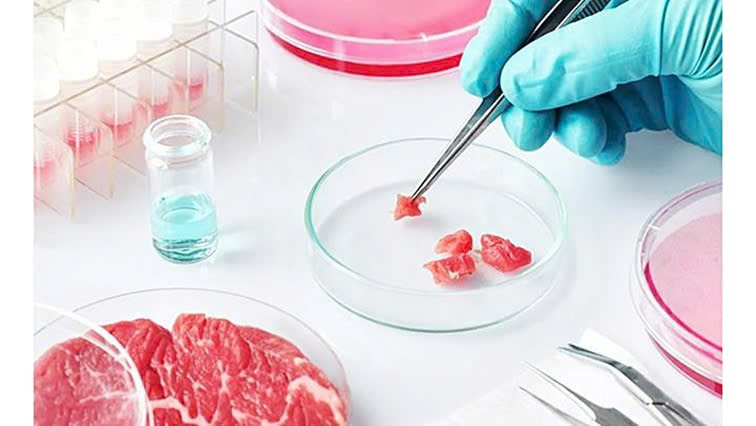
2. Definition and Scientific Nature of Cultured Meat
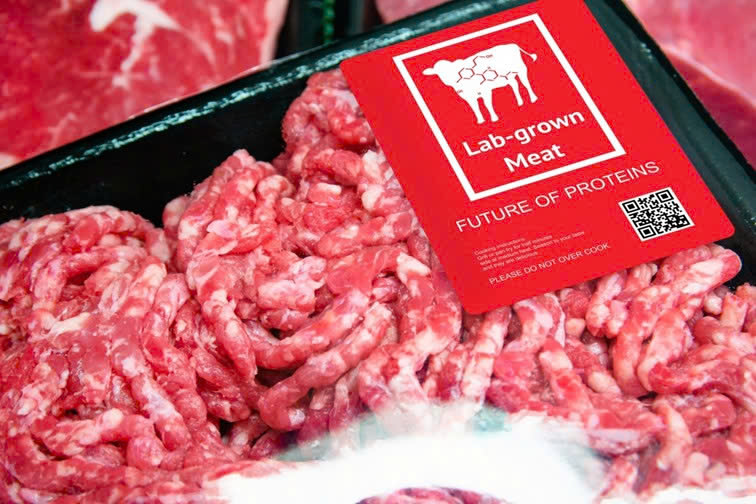
Cultured meat is a product created by cultivating animal cells in an artificial environment, instead of raising a whole animal. These cells, usually muscle stem cells, are stimulated to grow and differentiate into muscle tissue—the main structural component of meat.
In essence, cultured meat:
- Has a biological structure similar to natural meat
- Does not involve animal slaughter
- Is produced in a controlled environment, such as a laboratory or biomanufacturing facility
It is the result of the integration of several fields, including:
- Biotechnology
- Tissue engineering
- Food technology
- Biochemical engineering
3. Production Process of Cultured Meat
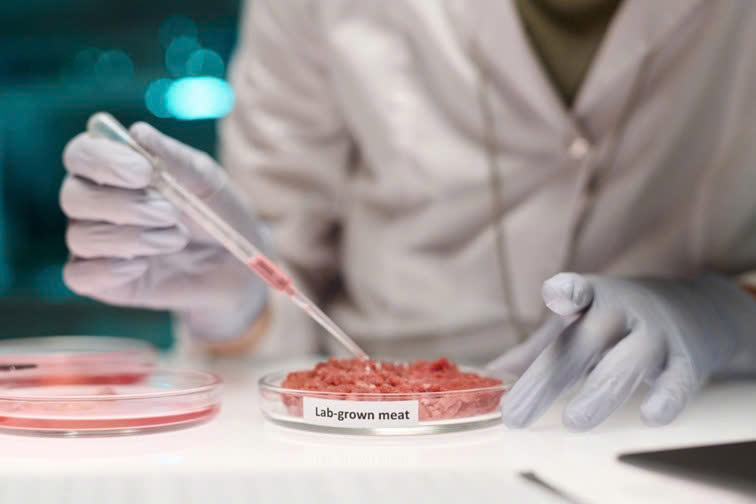
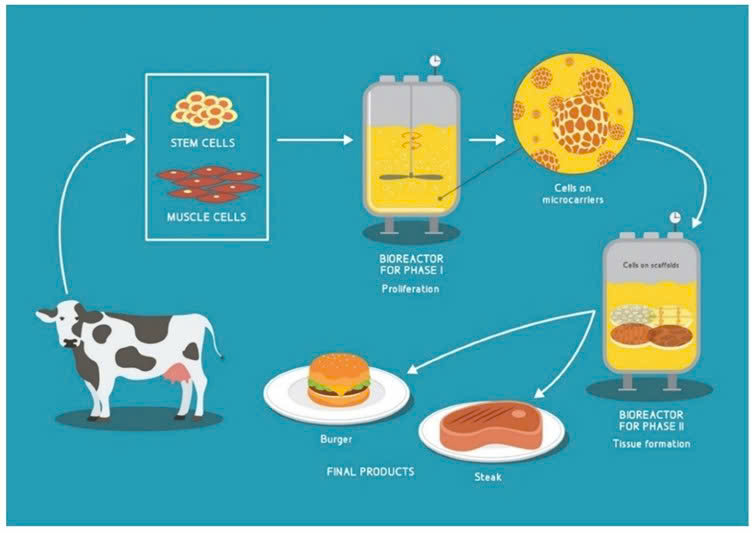
The production process of cultured meat involves several high-tech steps:
3.1. Cell Collection
Cells are collected from animals, such as cattle, chickens, or fish, through a biopsy using a very small sample, which does not cause significant harm to the animal.
3.2. Cell Cultivation
The cells are cultured in a nutrient-rich medium containing amino acids, glucose, vitamins, and growth factors inside a device called a bioreactor.
3.3. Cell Proliferation and Differentiation
The cells rapidly divide and are stimulated to develop into muscle tissue and fat tissue in order to create a structure similar to real meat.
3.4. Product Structuring
Biological scaffolds are used to shape the three-dimensional structure of the meat, such as whole cuts, fibers, or minced forms.
3.5. Harvesting and Processing
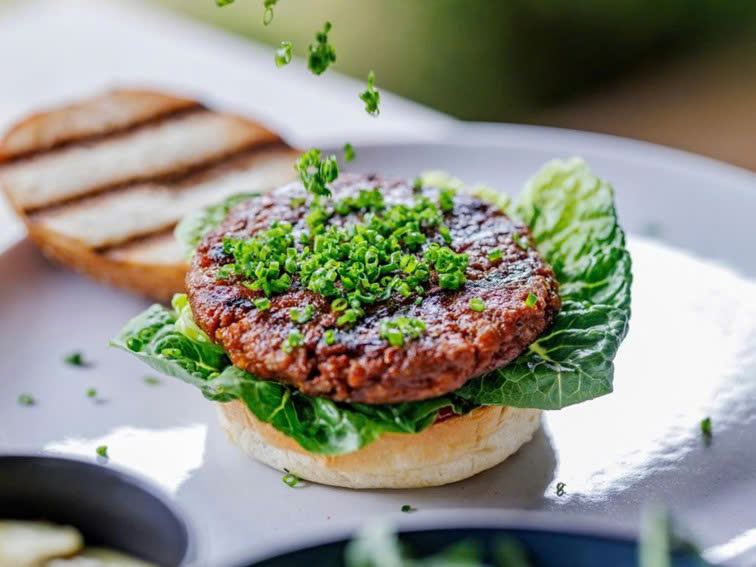
Once the product reaches the required mass, it is harvested and processed into food products such as burgers, sausages, or whole-cut meat.
4. Benefits of Cultured Meat
4.1. Environmental Benefits
- Significantly reduces greenhouse gas emissions compared to traditional livestock farming
- Saves land area and water resources
- Helps limit deforestation for livestock production
4.2. Food Safety Benefits
- Produced in a sterile environment, thereby reducing the risk of microbial contamination
- Does not require the use of antibiotics, helping to limit antibiotic resistance
- Allows nutritional components to be controlled
4.3. Ethical and Social Benefits
- Reduces animal slaughter
- Aligns with the trend of “green” and humane consumption
4.4. Long-Term Economic Benefits
- Has the potential to reduce costs when produced on a large scale
- Creates a new industry in the field of high-tech food production
5. Challenges in the Development of Cultured Meat
Despite its many advantages, cultured meat still faces several barriers:
5.1. High Production Costs
At present, the cost of cell cultivation and nutrient media remains expensive.
5.2. Sensory Issues
Recreating the flavor and texture of real meat, especially whole-cut meat, remains a major challenge.
5.3. Consumer Perception
Some consumers are still hesitant about “laboratory-grown food.”
5.4. Regulatory Framework
Many countries have not yet established clear regulations for the production and consumption of cultured meat.
6. Global Development Status
Currently, many countries have made important progress:
- Singapore was the first country to approve the commercial sale of cultured meat
- The United States has allowed several companies to produce and distribute cultured meat products
- Major corporations are investing heavily in the field of alternative proteins
This shows that cultured meat is no longer merely an idea, but is gradually becoming a practical trend in the global food industry.
7. Future Prospects
In the future, cultured meat may:
- Become a major protein source that partially replaces traditional meat
- Be integrated with AI to optimize production processes
- Enable the development of personalized products based on nutritional needs
- Contribute to building a sustainable global food system.
8. Conclusion
Cultured meat is one of the notable achievements of modern food technology, reflecting the shift from traditional production methods to high-tech and sustainable production.
Although many challenges remain, with the current pace of development, cultured meat is expected to play an important role in ensuring food security and protecting the environment in the future.
References
1. FAO (Food and Agriculture Organization). (2023). The Future of Food and Agriculture – Trends and Challenges.
2. Post, M. J. (2012). Cultured meat from stem cells: Challenges and prospects. Meat Science, 92(3), 297–301.
3. Stephens, N. et al. (2018). Bringing cultured meat to market: Technical, socio-political, and regulatory challenges. Trends in Food Science & Technology.
4. Bhat, Z. F., & Kumar, S. (2015). In vitro meat production: Challenges and benefits. Journal of Integrative Agriculture.
5. OECD. (2022). Emerging Technologies in Food Systems.
6. Good Food Institute. (2024). State of the Industry Report: Cultivated Meat.