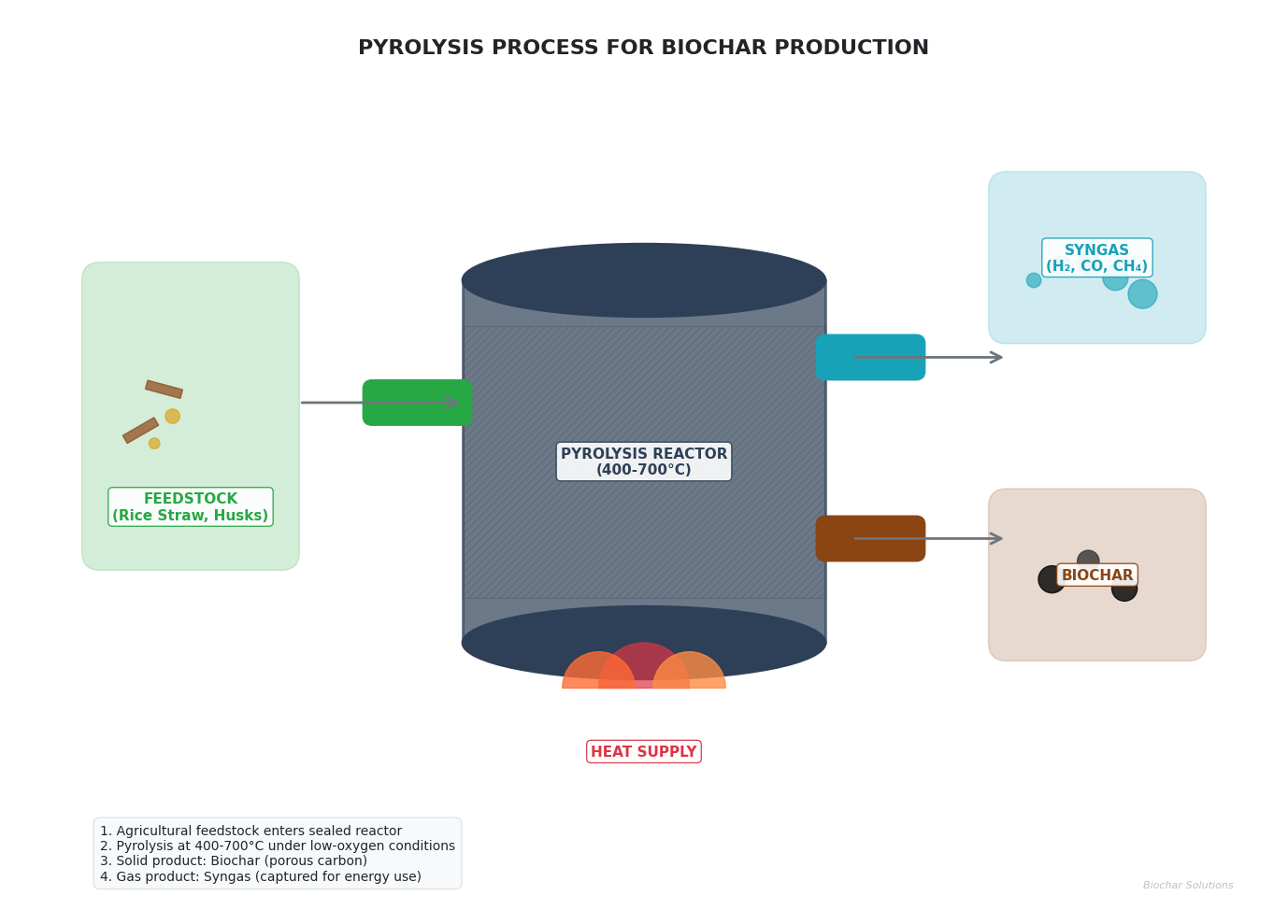
Figure 1 Caption: Pyrolysis process converting rice straw and husks into Biochar. Image creation prompt: A vector graphic illustration of a closed pyrolysis reactor converting organic feedstock into biochar, with syngas being captured, and arrows indicating input and output flows.
In the harsh landscapes of acid sulfate and saline soils in the Mekong Delta or Central Coastal Vietnam, the farmer's struggle has been relentless. Soil acidity and salt intrusion make farming precarious. However, a sustainable solution is igniting from the very wastes of the fields: biochar produced from agricultural by-products.
The Science Behind “Black Gold” Biochar
Biochar is not ordinary charcoal. It is the carbon-rich product of pyrolyzing organic waste—like rice straw, husks, or coconut coir—at 400-700°C in a low-oxygen environment. Its microscopic honeycomb structure is the key to soil remediation: (1) Its alkaline surface neutralizes toxic aluminum and iron ions in acid sulfate soils and adsorbs salinity-causing sodium ions; (2) The porous structure acts as a "reservoir," enhancing water and nutrient retention and reducing leaching; (3) It provides an ideal habitat for beneficial soil microorganisms to thrive, restoring soil biology.
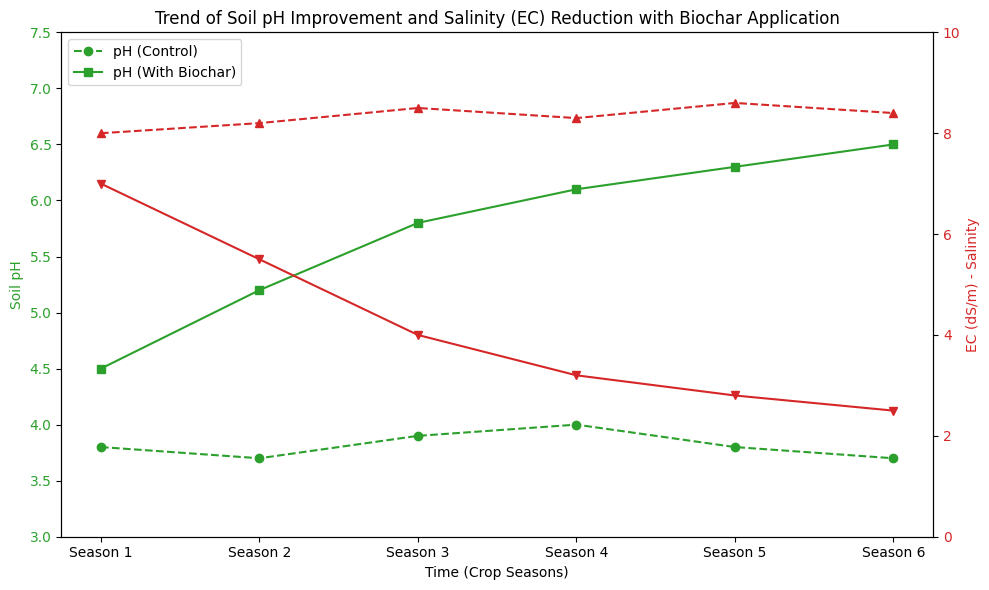
Chart 1 Caption: Trend of soil pH improvement and salinity (EC) reduction over cropping seasons with Biochar application. Illustrated data from a pilot model in Soc Trang province.
The Dual Impact: Economic and Environmental
Economically, Biochar enables an on-site circular agriculture model. Farmers not only save waste disposal costs but also reduce fertilizer and soil amendment expenses by 30-50%. Crucially, healthier soil leads to more stable and increased crop yields. It creates dual economic value: from waste and from crop productivity.
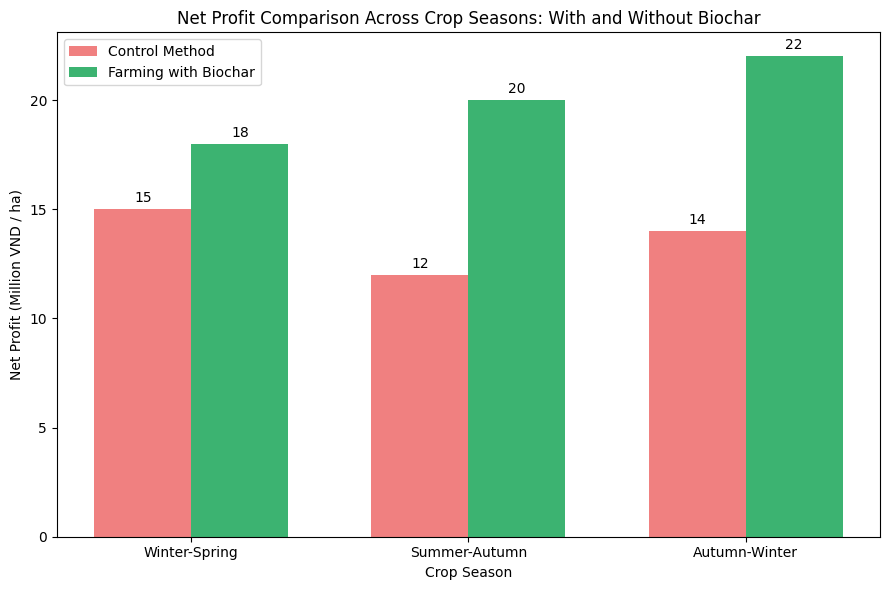
Chart 2 Caption: Comparison of net profit (million VND/ha) from rice cultivation between control methods and Biochar-integrated methods in Ca Mau.
Environmentally, Biochar is an effective carbon sequestration tool. Carbon in agricultural waste typically decomposes rapidly, releasing CO2. When converted to Biochar, this carbon is stabilized in the soil for centuries to millennia. Reducing open-field burning of straw also improves air quality and protects community health.
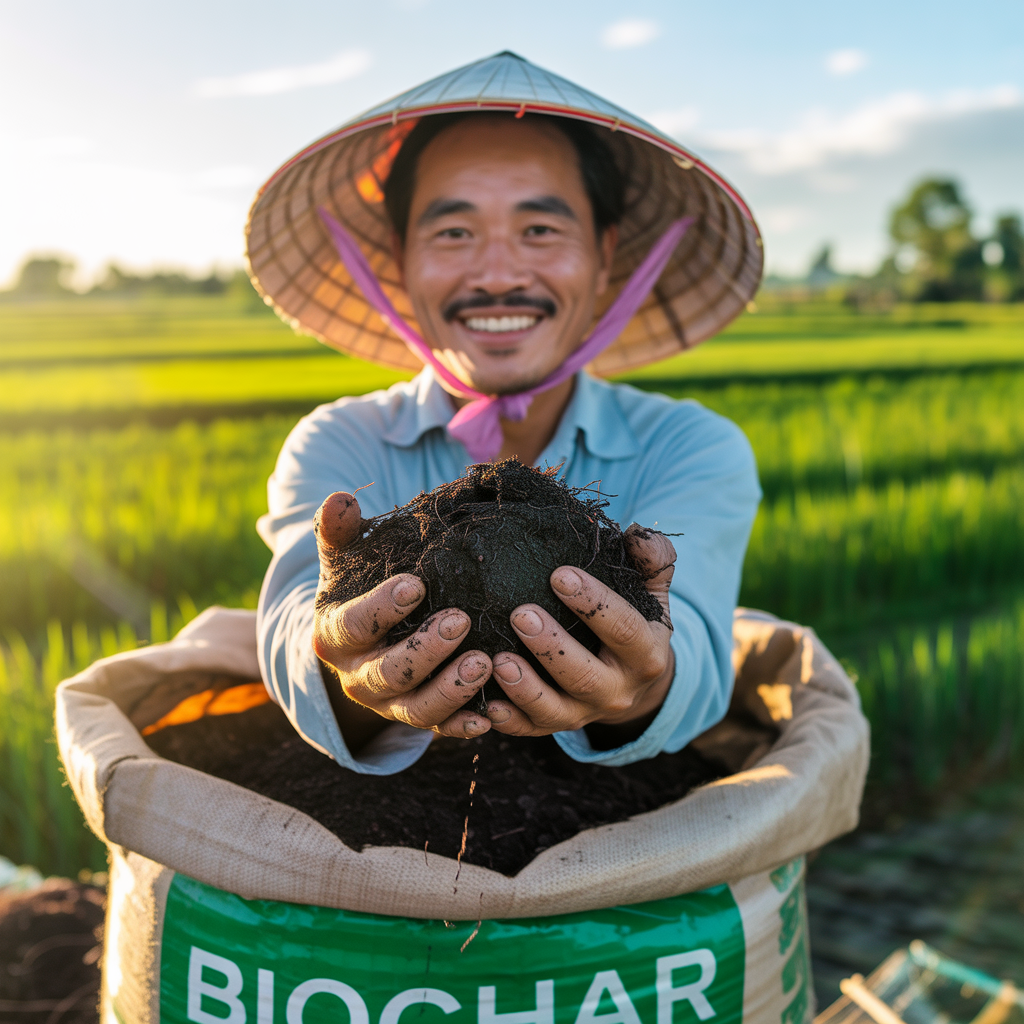
Figure 2 Caption: A thriving rice field on reclaimed acid sulfate/saline soil using Biochar. Image creation prompt: A realistic photo of a lush green rice field, with a bag of biochar in the foreground, a farmer holding a handful of soil mixed with biochar, showing a hopeful expression.
Towards a Responsible Agriculture
Biochar is helping shift the mindset from passive adaptation to active transformation. Instead of feeling powerless, farmers become "doctors of the land," using by-products from their own farms to heal the soil. This encourages a conservation-oriented mindset, steering agriculture towards greater responsibility and sustainability.
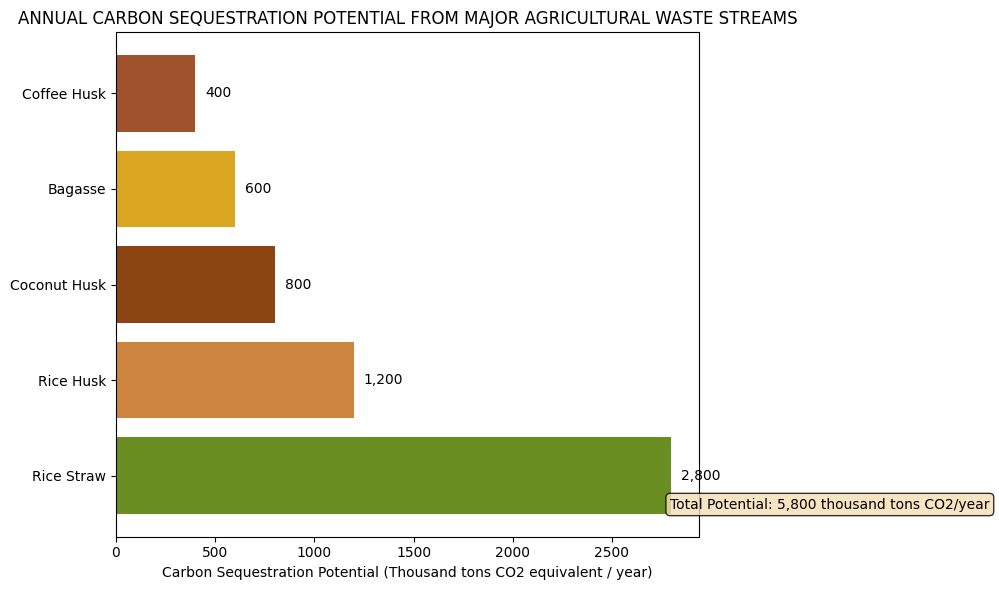
Chart 3 Caption: Annual carbon sequestration potential from converting major agricultural waste streams in the Mekong Delta into Biochar.
The challenge of acid sulfate and saline soils is finding a solution in what was once considered a problem. Biochar is not a miracle cure, but a scientific, feasible, and humane solution. For this "black gold" to truly shine, it requires collaboration among scientists, policymakers, businesses, and, most importantly, farmers—those who understand the land, cherish it, and now have a new tool to heal it.
Suggested References:
- Lehmann, J., & Joseph, S. (Eds.). (2015). Biochar for Environmental Management: Science, Technology and Implementation (2nd ed.). Routledge.
- Jeffery, S., Verheijen, F. G. A., van der Velde, M., & Bastos, A. C. (2011). A quantitative review of the effects of biochar application to soils on crop productivity using meta-analysis. Agriculture, Ecosystems & Environment, 144(1), 175-187.
- Woolf, D., Amonette, J. E., Street-Perrott, F. A., Lehmann, J., & Joseph, S. (2010). Sustainable biochar to mitigate global climate change. Nature Communications, 1(1), 56.