1. Overview: What is Digital Biotechnology?
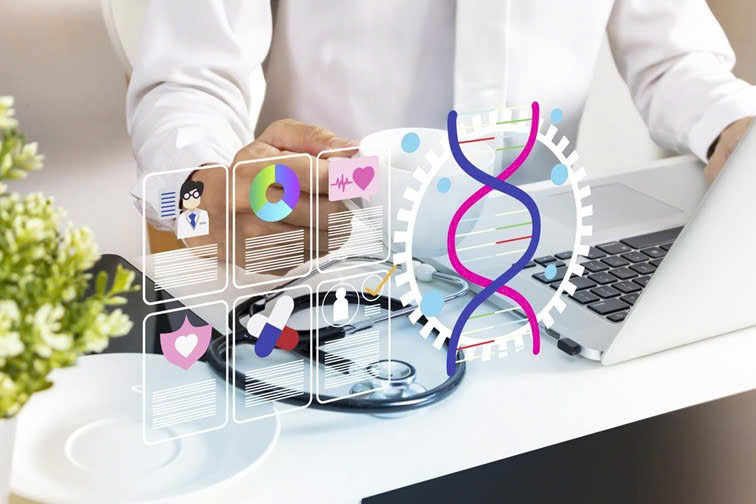
Digital Biotechnology is an interdisciplinary field that integrates life sciences with digital technologies to collect, store, analyze, and apply biological data for solving problems in medicine, agriculture, food technology, and environmental science.
While traditional biological research primarily relied on laboratory experiments, modern advancements in computing and algorithms now enable scientists to:
- Analyze millions of genetic data points within hours;
- Simulate biological reactions using computational models;
- Predict outcomes before conducting actual experiments.
In simple terms:
- Traditional biology = “conducting experiments”
- Digital biotechnology = “conducting experiments + processing biological data through computational systems”
This field has rapidly expanded through the development of Bioinformatics, Data Science, and Artificial Intelligence (AI).
2. Background and Development Drivers
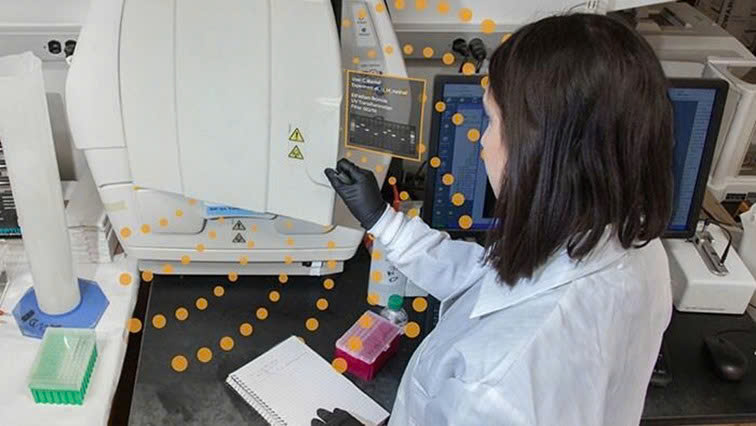
The rapid growth of biological data in recent years has been the key driver behind the emergence of digital biotechnology.
For example:
- A single human genome contains billions of DNA base pairs;
- Research involving proteins and microorganisms generates enormous datasets.
Without technological support, data analysis would:
- Require many years to complete;
- Be highly prone to errors;
- Be difficult to scale efficiently.
Digital biotechnology addresses these challenges by:
- Rapidly processing Big Data;
- Automating analytical procedures;
- Predicting biological trends and outcomes.
As a result, scientific research has become significantly faster and more accurate.
3. Core Technologies in Digital Biotechnology
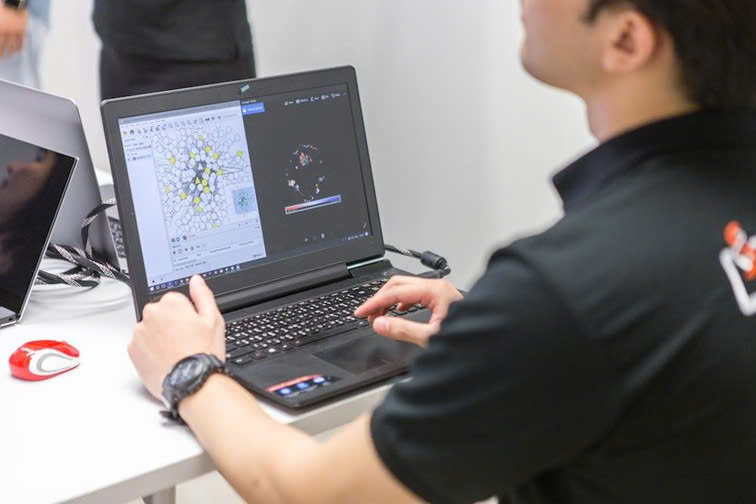
Digital biotechnology is built upon several advanced technological foundations.
a. Genome Sequencing
Genome sequencing enables scientists to decode the complete DNA structure of organisms, thereby providing a deeper understanding of genetic composition and function.
b. Artificial Intelligence (AI)
AI technologies are applied to:
- Predict protein structures;
- Detect diseases from biological datasets;
- Support drug discovery and development.
c. Cloud Computing
Cloud computing facilitates:
- Large-scale storage of biological data;
- Global collaboration and data sharing among researchers.
d. Computational Biology
Computational biology enables:
- Virtual modeling of cells and proteins;
- Reduction in the need for physical laboratory experiments.
A prominent example is the AI system developed by Google DeepMind, which can predict protein structures with exceptionally high accuracy.
4. Practical Applications of Digital Biotechnology
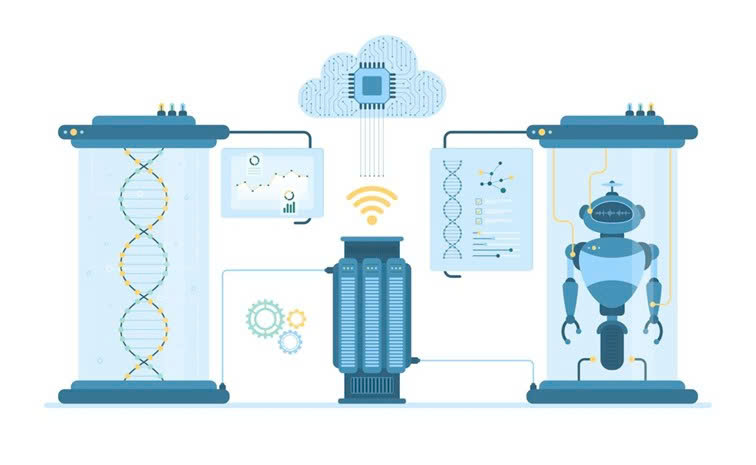
Digital biotechnology is driving transformative changes across multiple sectors.
a. Medicine
- Accelerating drug discovery and development;
- Enabling early disease diagnosis through data analysis;
- Supporting personalized treatment strategies tailored to individual patients.
b. Agriculture
- Analyzing crop genomes to develop superior plant varieties;
- Monitoring pests and diseases using sensors and data systems.
c. Food Technology
- Improving food quality control and safety monitoring;
- Supporting the development of functional foods.
d. Environmental Science
- Monitoring air and water pollution;
- Analyzing microbial ecosystems in the environment.
Digital biotechnology effectively extends biological science beyond the laboratory and accelerates real-world applications.
5. Major Advantages
Digital biotechnology offers several significant benefits:
- Faster research processes: reducing timelines from years to months;
- Higher accuracy: minimizing errors through data-driven analysis;
- Cost efficiency: decreasing the reliance on extensive physical experimentation;
- Scalability: enabling global-scale biological data processing.
These advantages explain why many developed countries are heavily investing in this field.
6. Challenges and Concerns
Despite its great potential, digital biotechnology faces several critical challenges:
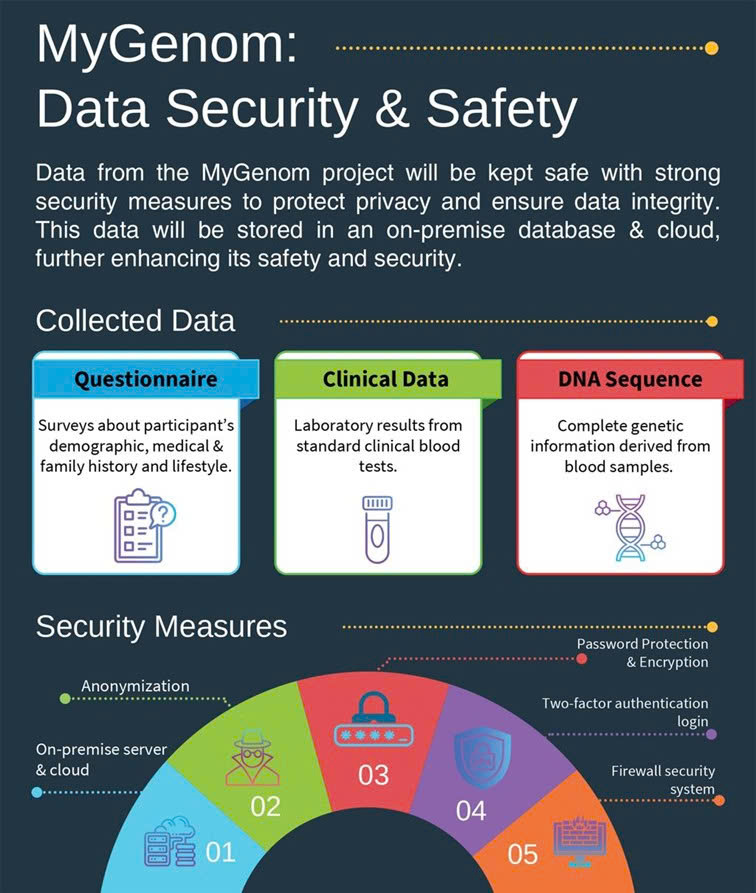
- Protection of biological and genetic data privacy;
- High technological infrastructure requirements;
- Shortage of interdisciplinary professionals skilled in both biology and technology;
- Ethical concerns related to genetic research and manipulation.
These issues require strict governance frameworks and appropriate regulatory policies.
7. Future Development Trends
In the future, digital biotechnology is expected to evolve rapidly through:
- Digital Twin technology for simulating human diseases;
- AI-driven automated drug development;
- Fully automated laboratories;
- Integration of IoT, AI, and biotechnology into intelligent systems.
👉 The ultimate goal is to achieve research processes that are faster, more accurate, and highly personalized.
8. Conclusion
Digital biotechnology represents a major advancement in modern science. The integration of biology with digital technology not only enhances research efficiency but also creates broad practical applications across various industries.
In the future, this field will play a pivotal role in:
- Precision medicine;
- Smart agriculture;
- Sustainable development.
👉 Digital biotechnology is expected to become one of the core technological sectors of the digital era.
References (APA 7th Edition)
- Nature Publishing Group, Jumper, J., Evans, R., Pritzel, A., Green, T., Figurnov, M., Ronneberger, O., … & Google DeepMind. (2021).Highly accurate protein structure prediction with AlphaFold. Nature, 596(7873), 583–589. https://doi.org/10.1038/s41586-021-03819-2
- National Institutes of Health National Human Genome Research Institute. (2020). A brief guide to genomics.
- World Health Organization World Health Organization. (2021).
Global strategy on digital health 2020–2025.
- IBM Research. (2022). Artificial intelligence for drug discovery and biotechnology.
- National Center for Biotechnology Information Baxevanis, A. D., & Ouellette, B. F. F. (2005). Bioinformatics: A practical guide to the analysis of genes and proteins (3rd ed.).
- Elsevier Lesk, A. M. (2019). Introduction to bioinformatics (5th ed.). Oxford University Press.
- McKinsey & Company, McKinsey Global Institute. (2020).
The bio revolution: Innovations transforming economies, societies, and our lives.