Traditional Chinese sausage typically contains a high fat content to create juiciness, richness, and a satisfying “full-bodied” texture. However, this fat level also increases energy and lipid content—leading many consumers, especially health-conscious individuals, to hesitate despite their fondness for this familiar dish.
In this study, the authors developed a low-fat Vietnamese sausage by reducing pork back fat and incorporating high-methoxyl pectin (HMP) extracted from passion fruit peels (Passiflora edulis) to reinforce the structure. This approach not only promotes a healthier product but also contributes to the valorization of agricultural by-products.
Core concept: “Fat delivers palatability” – pectin mimics that function
Pectin, particularly HMP, is capable of forming gel networks, retaining water, and supporting structure in comminuted meat emulsions. Leveraging these properties, the research team from the Faculty of Engineering and Technology, Van Hien University, aimed to minimize fat content while maintaining the characteristic chewiness, elasticity, and juiciness comparable to traditional sausage—through the formation of a protein–water–pectin network.
How was pectin extracted from passion fruit peels?
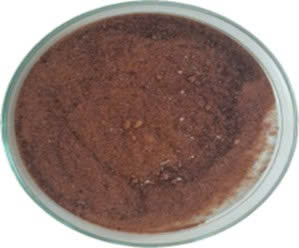
The passion fruit peels were cleaned, cut into small pieces, dried at 60 °C, ground, and sieved (40–60 mesh). Pectin was extracted using 5% citric acid at a solid-to-liquid ratio of 1:20, assisted by ultrasound treatment at 550 W and 60 °C for 5 minutes. The extract was then filtered and precipitated with 96% ethanol (1:1 ratio), washed with ethanol, and dried at 55 °C.
Experimental design: a practical two-step “formulation screening” approach
Step 1: Selecting the lean-to-fat base ratio (without pectin)
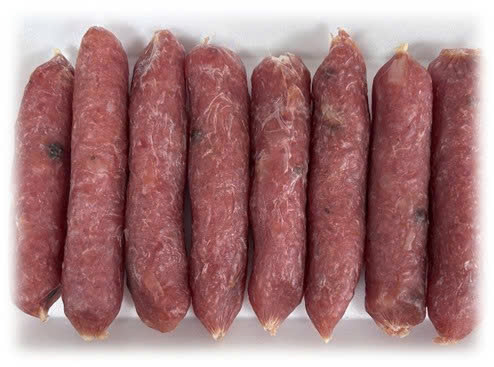
Three lean-to-fat ratios were compared: 68:15, 73:10, and 78:5 (w/w), followed by drying at 60 °C for 24 hours. Sensory evaluation indicated that the 78:5 ratio achieved the highest overall acceptance score (5.43), making it the most suitable base formulation for subsequent pectin incorporation.
Step 2: Optimizing pectin content on the low-fat base
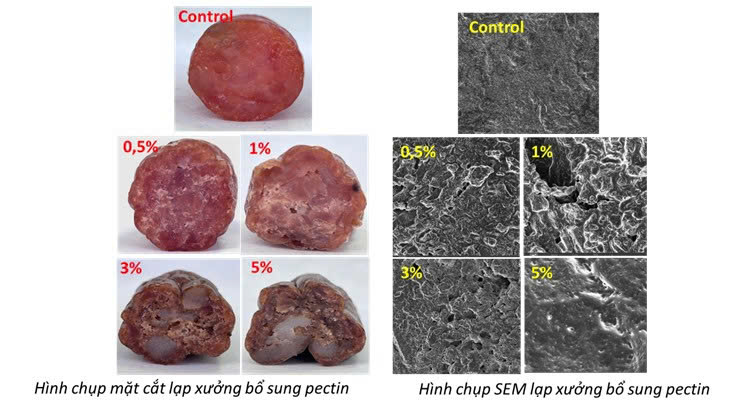
Using the selected low-fat base, the research team tested pectin levels ranging from 0–5% and evaluated sensory attributes, texture profile analysis (TPA), and microstructure (SEM).
Key finding: 0.5% pectin as the “sweet spot”
1. Instrumental texture (TPA) remained comparable to the traditional control
At 0.5% pectin with a lean-to-fat ratio of 77.5:5, textural parameters such as hardness, gumminess, chewiness, and cohesiveness were nearly equivalent to those of the traditional control sample (63:20). Notably, springiness was even slightly higher than the control.
2. SEM micrographs revealed a gel network that “mimics” fat particles
At 0.5% pectin, SEM images showed a fine gel network with numerous small cavities, helping to simulate the juiciness typically provided by dispersed fat droplets.
When the pectin level was increased to 3–5%, the gel network became overly continuous and dense, resulting in diminished palatability and a decline in structural quality.
3. Nutritional profile of the optimized formulation: clearly lower in fat, markedly higher in protein
The optimal formulation (77.5% lean meat, 5% fat, 0.5% pectin) achieved the following nutritional values per 100 g:
262 kcal, 27.8 g protein, 8.31 g lipid, 19.1 g carbohydrate, and 3.53 g dietary fiber.
Compared with three popular commercial brands, the product demonstrated:
- 35–53% reduction in energy
- 67–82% reduction in lipid content
- 60–180% increase in protein content
- Additional dietary fiber (while the reference products did not declare fiber content)
Why is this approach commercially promising?
- Reduced fat while maintaining eating quality:
The inclusion of 0.5% pectin helps compensate for structural loss due to fat reduction, minimizing the “texture gap” typically associated with low-fat reformulations.
- Valorization of passion fruit peel by-products:
Transforming agricultural waste into a value-added functional ingredient aligns well with circular economy principles.
- Clear and marketable nutritional claims:
“High-protein, low-fat, with dietary fiber” — a compelling message for a product category traditionally perceived as high in fat.
Original article citation:
Huynh, D.T., & Tran, U.P.N. (2025). Low-Fat Vietnamese Sausage (Lap Xuong) Formulated with Passion-Fruit Peel Pectin as a Sustainable Fat Replacer. Chemical Engineering Transactions, 122, 319–324. https://doi.org/10.3303/CET25122054.