Introduction
In the modern context, plastics and plastic products are widely used in various fields—from packaging, construction, automotive, and electronics to agriculture. The rapid increase in global plastic production has created serious environmental pollution issues involving microplastics (MPs) and nanoplastics (NPs). These micro- and nanosized particles not only persist in the environment but also contain or adsorb numerous hazardous chemicals such as additives (plasticizers, flame retardants, etc.) and persistent organic pollutants (POPs), thereby affecting ecosystems and human health. The widespread distribution of these plastic particles has created a global biological threat that requires in-depth investigation and the implementation of sustainable mitigation strategies.
1. Overview of Hazardous Chemicals Associated with Micro- and Nanoplastics
Plastics as well as micro- and nanoplastics are primarily composed of various polymers such as polyethylene (PE), polypropylene (PP), polyvinyl chloride (PVC), polyethylene terephthalate (PET), polyurethane (PUR), etc. (Ahamad et al., 2022). In particular, chemical additives are incorporated to enhance the mechanical and chemical properties of plastics but pose significant toxicological risks. The major chemical groups include:
- Plasticizers (e.g., phthalates, adipates, trimellitates): added to increase plastic flexibility but easily migrate from polymers into the environment, affecting cellular metabolism, endocrine function, reproduction, neurodevelopment, and may induce cancer (Vaughn, 2010; Behairy et al., 2021).
- Halogenated flame retardants (PBDEs, HBCD, TBBPA, etc.): used to improve fire resistance but cause pollution, bioaccumulation, and adverse effects on the liver, reproductive system, nervous system, and immune function (Shaw et al., 2010; Hakk & Letcher, 2003).
- Colorants, antistatic agents, and other additives, which also contribute to environmental contamination and increased toxicity complexity (Pfaff, 2021).
Long-term accumulation and exposure to these chemicals through ingestion, inhalation, or dermal contact can induce oxidative stress, inflammation, gene mutations, and endocrine disruption, leading to chronic diseases in humans and animals (Duan et al., 2017).
2. Biological Impacts and Health Risks
2.1 Oxidative Stress and Inflammation
Phthalates and flame retardants promote the overproduction of reactive oxygen species (ROS), damaging DNA, lipids, and proteins, thereby disrupting cellular homeostasis and triggering prolonged inflammatory responses (Kim et al., 2013; Duan et al., 2017).
2.2 Endocrine and Reproductive Disruption
These compounds can block or overstimulate hormone receptors (estrogen, androgen, thyroid), disrupting reproductive processes and neurodevelopment, negatively affecting fetal development, sperm quality, and menstrual cycles (Fiocchetti et al., 2021; Hales & Robaire, 2020).
2.3 Cytotoxicity, Genetic Mutations, and Cancer
Chronic exposure may cause DNA damage, impair DNA repair systems, induce cancers of the liver, kidney, thyroid, and compromise immune function (Chen et al., 2018; Al-Harbi et al., 2021).
2.4 Neurological Impacts
Halogenated flame retardants interfere with dopaminergic and serotonergic systems, leading to behavioral disorders and cognitive impairment (Mariussen & Fonnum, 2001). Additionally, endocrine stress and brain inflammation may increase the risk of Alzheimer’s, Parkinson’s, and other neurological disorders.
2.5 Risks for Children and Vulnerable Groups
Children, fetuses, pregnant women, and the elderly are at heightened risk due to sensitive developmental periods or reduced detoxification capacity, resulting in higher accumulation of toxic chemicals (Zhu et al., 2018).
3. Environmental and Ecological Impacts
The widespread release of micro- and nanoplastics along with chemical additives into soil, water, and air forms a long-term pollution source that can bioaccumulate throughout aquatic and terrestrial food chains (Bergmann et al., 2022; Rocha-Santos & Duarte, 2017). The leaching and dispersion of additives lead to reduced biodiversity, harm to ecological populations, and degradation of natural resources.
4. Sustainable Mitigation Strategies
Managing and reducing pollution from microplastics, nanoplastics, and associated chemical additives requires a multidisciplinary approach. Priority is given to environmentally friendly and green solutions, including:
- Developing green nanomaterials as alternatives to toxic additives.
- Strengthening plastic waste management and improving recycling efficiency.
- Advancing analytical methods for accurate identification of microplastics and associated toxicants.
- Implementing technologies for safe filtration and degradation of microplastics in the environment (Pichtel & Simpson, 2023).
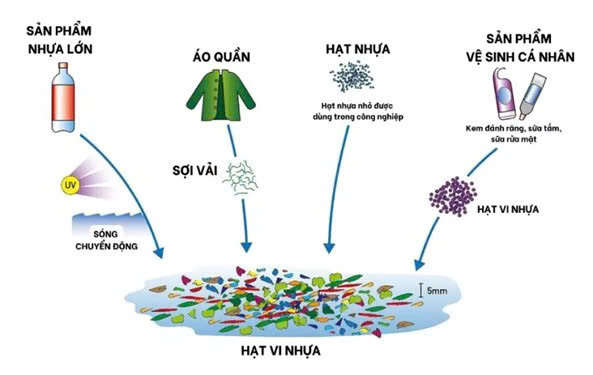
Figure 1. Diagram of the sources and impacts of hazardous chemicals in microplastics and nanoplastics on human health and the environment
Conclusion
Microplastics and nanoplastics, along with hazardous chemical additives such as phthalates, adipates, trimellitates, and halogenated flame retardants, pose serious consequences for human health, animals, and ecosystems. Their impacts include oxidative stress, endocrine disruption, genetic mutations, cancer, and neurological disorders. Developing sustainable mitigation solutions—focusing on environmentally friendly materials and strict control of emission sources—is essential to protect global health and maintain ecological balance.
Dr. Pham Thi Hai Ha, Faculty of Engineering and Technology, Van Hien University.
References
- Ahamad, A., Singh, P., & Tiwary, D. (2022). Plastic and microplastic in the environment: Management and health risks. Environmental Pollution, 324, 121–135.
- Bergmann, M., et al. (2022). Plastic pollution in the Arctic. Nature Reviews Earth & Environment, 3(5), 323–337.
- Duan, Y., Wang, L., Han, L., et al. (2017). Exposure to phthalates in patients with diabetes and its association with oxidative stress, adiponectin, and inflammatory cytokines. Environment International, 109, 53–63.
- Fiocchetti, M., Bastari, G., Cipolletti, M., et al. (2021). The peculiar estrogenicity of diethyl phthalate: Modulation of estrogen receptor activities. Toxics, 9(10), 237.
- Kim, J. H., Park, H. Y., Bae, S., et al. (2013). Diethylhexyl phthalates is associated with insulin resistance via oxidative stress. PLoS ONE, 8(8), e71392.
- Shaw, S. D., Blum, A., Weber, R., et al. (2010). Halogenated flame retardants: Do the fire safety benefits justify the risks? Reviews on Environmental Health, 25(4), 261–305.
- Zhu, Y., Gao, H., Huang, K., et al. (2018). Prenatal phthalate exposure and placental size and shape at birth. Environmental Research, 160, 239–246.
- Rocha-Santos, T. A. P., & Duarte, A. C. (2017). Characterization and analysis of microplastics. Comprehensive Analytical Chemistry, 75, 239–280.
- Pichtel, J., & Simpson, M. (2023). Microplastics: Behavior, fate, and remediation. Bernan Press.