1. Objects Eligible for Industrial Property Protection
Industrial Property Rights (IPRs) provide legal protection for a wide range of intellectual assets, including:
- Patents: Exclusive rights granted for inventions, whether products or processes, that satisfy the requirements of novelty, inventive step, and industrial applicability.
- Utility Solution Patents: Protection for technical solutions that are novel and industrially applicable, with lower requirements regarding inventive step than patents.
- Industrial Designs: Protection of the external appearance of products as expressed through shapes, lines, patterns, colors, or combinations thereof.
- Trademarks: Signs, logos, or names used to distinguish goods or services of one entity from those of others.
- Trade Names: Names used by organizations or enterprises in business activities.
- Geographical Indications: Signs identifying products originating from a specific geographical area where a given quality, reputation, or characteristic is essentially attributable to that origin.
Additional forms of protection include layout designs of semiconductor integrated circuits, trade secrets, and rights against unfair competition.
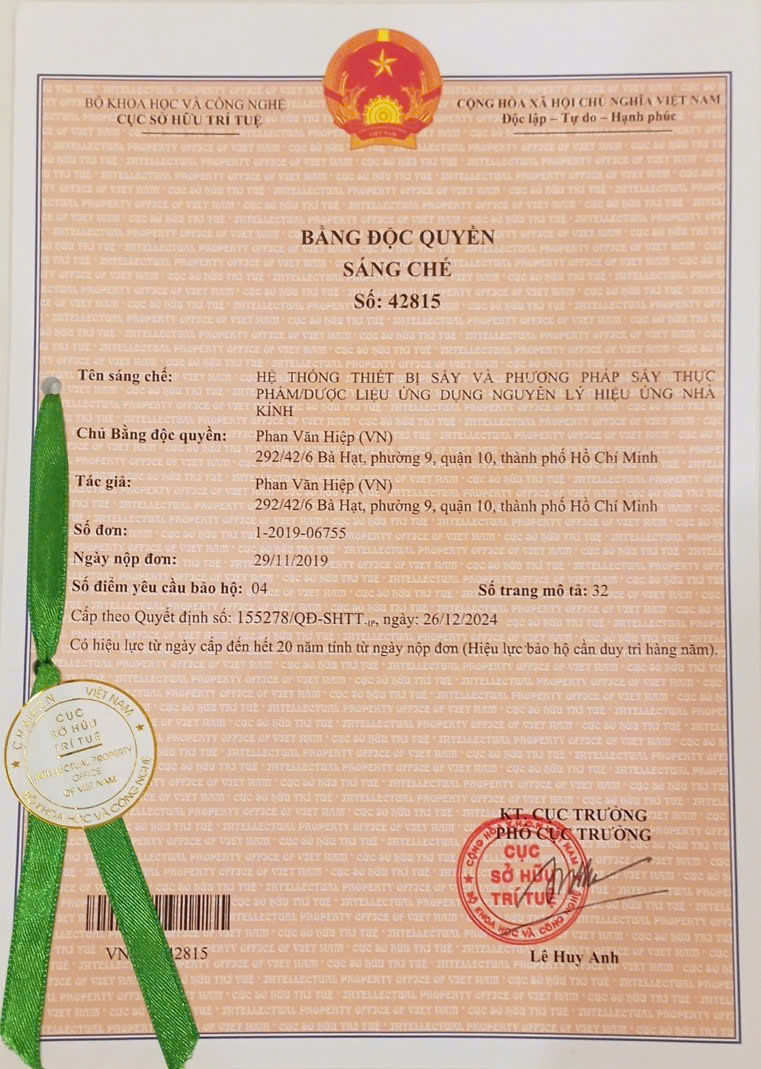
2. Basis and Principles for the Establishment of Rights
First-to-File Principle
Industrial property protection generally follows the First-to-File Principle, under which priority rights are granted to the applicant who files a valid application first.
Basis for Establishment of Rights
- Most industrial property objects, including patents, utility solutions, industrial designs, trademarks, and layout designs of integrated circuits, are protected only after the competent authority issues a protection title or registration certificate. In Vietnam, this authority is the Intellectual Property Office of Vietnam (IP Vietnam).
- Certain objects, such as trade names, trade secrets, and geographical indications, may obtain protection automatically through lawful use or compliance with statutory protection requirements and do not necessarily require registration.
3. Duration of Protection
Industrial property rights are not perpetual. Protection periods vary according to the type of intellectual property in order to balance the interests of rights holders and society.
|
Protected Object
|
Maximum Protection Term
|
Maintenance / Renewal Requirements
|
|
Patent
|
20 years from the filing date
|
Non-renewable; annual maintenance fees are required
|
|
Utility Solution Patent
|
10 years from the filing date
|
Non-renewable; annual maintenance fees are required
|
|
Industrial Design
|
Up to 15 years
|
Initially granted for 5 years and renewable twice, each for an additional 5-year term
|
|
Trademark
|
Potentially indefinite
|
Initially granted for 10 years and renewable indefinitely in successive 10-year periods
|
|
Trade Secret
|
Potentially indefinite
|
Protected as long as confidentiality is maintained and legal protection conditions continue to be met
|
4. Territorial Nature and Limitations of Rights
Territorial Principle
Industrial property rights are territorial in nature. A protection title granted by one country is legally effective only within that country's jurisdiction. To obtain protection abroad, applicants must file applications in the target countries or utilize international filing systems, such as the Patent Cooperation Treaty (PCT) for patents and the Madrid System for trademarks.
Limitations of Rights
Rights holders are entitled to exclusively exploit their protected assets and prevent unauthorized use by others. However, such rights are subject to certain limitations, including:
- Use for non-commercial personal purposes;
- Use for research, educational, or teaching activities;
- Cases where the State requires compulsory licensing for reasons related to national defense, security, public health, or other public interests.
These limitations aim to ensure an appropriate balance between private rights and broader societal benefits.