Since ancient times, "eating well" (palatability) has always been one of the most critical drivers governing human food choices. Regardless of the cultural context, the value of a dish is often determined by sensory factors. From this foundation, the sensory perception of "deliciousness" in food has profoundly mutated into economic and social dimensions. A Michelin-starred restaurant can sell a meal at a price many times higher than that of a casual eatery. Famous raw material regions have their products priced at a premium because their flavor profiles are deemed more distinctive than those of other regions.

The power of palatability is so immense that it has not vanished even as contemporary consumers are shifting toward "healthy eating."
Healthy but Must Be Palatable
We talk extensively about nutrition, organic food, sugar reduction, fat reduction, cardiovascular health, weight management, blood glucose, or healthy dietary patterns. However, this does not equate to humans being willing to "eat unpalatably"; rather, we are merely seeking ways to enjoy delicious food in a different manner.
For instance, in vegetarian diets—a path pursued by many for health or ethical reasons—the demand for sensory satisfaction remains highly pronounced. We search for new raw materials, novel processing techniques, and innovative formulations to create more appealing vegetarian dishes. If the sole objective were to supply energy to the body, perhaps we would only require a few simple food items repeated day after day. Yet, reality is entirely different.
But Why Are Humans So Captivated by Palatable Dishes?
The answer lies within our own brain.
Throughout the evolutionary process, food was not merely a source of energy but a deciding factor for survival. Energy-dense foods such as sugars, fats, or protein-rich foods typically conferred an advantage to our ancestors in food-scarce environments. Consequently, the brain developed a "reward" system to incentivize humans to forage for and consume these survival-advantageous foods.
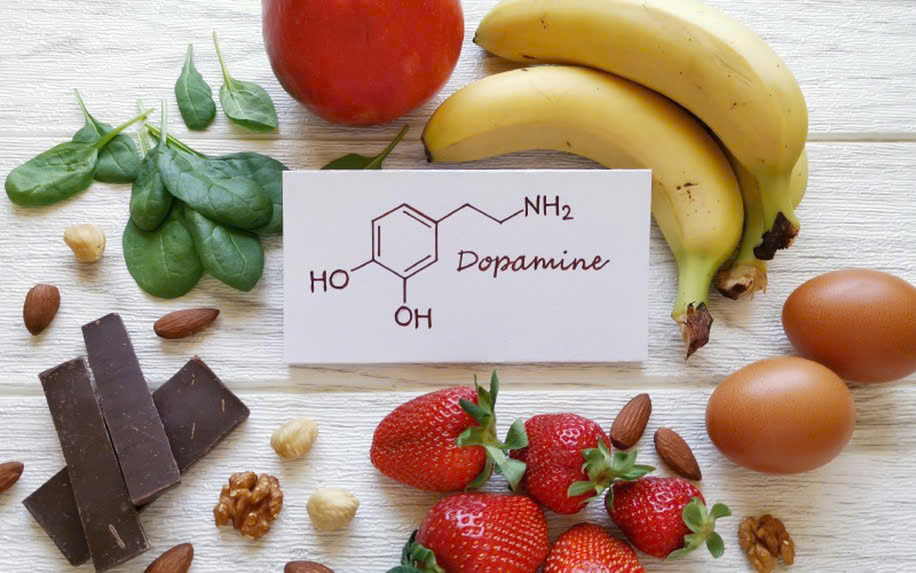
When savoring an appealing dish, signals from gustatory and olfactory senses are transmitted to the brain. Here, multiple neurotransmitters are released, prominently dopamine—a molecule associated with motivation, pleasure, and the sensation of reward.
Interestingly, dopamine does not only emerge when we ingest food. It is activated the moment we catch sight of a dish, smell its aroma, or simply reminisce about a favorite food. In other words, the brain does not merely reward the act of eating well but also drives us to continuously seek similar gastronomic experiences in the future. That is the reason why many people are willing to travel dozens of kilometers just to savor a famous dish, wait for hours, or repeatedly return to a favorite restaurant.
However, there is a nuance that few realize: the sensation of "deliciousness" we pursue is not fixed. Instead, it is shaped by the interaction among the food, the body, and the surrounding environment. For example, temperature, humidity, rainfall, or other environmental conditions can dictate the concentrations of sugars, acids, and flavor compounds in agricultural produce. Consequently, it is impossible to have an identical food product year after year. Similarly, consumer behavior, habits, and human perception also evolve over time. Therefore, the palatable dishes of today will no longer elicit the same sensation in the future, or at the very least, that palatability will gradually diminish over time.
Perhaps because of this, the journey of seeking palatable food has never concluded. What we pursue is not merely nutrition or satiety, but also the novel experiences that the brain constantly craves to explore. "Deliciousness," therefore, is not a fixed destination, but a perception that continuously shifts alongside humans and the world around them.
Tài liệu tham khảo: Hà Duyên Tư, Kỹ Thuật Phân Tích Cảm Quan Thực Phẩm, NXB Khoa Học Kỹ Thuật, 2010.